
One partner for the machine, the tooling and the process.

Most shops buy the machine from one company, the tooling from another and the programming help from a third — and then manage the gaps themselves. LOMA was built to close those gaps: machines, automation, tooling and application engineering from one team that stays accountable for how the machine actually runs.

What makes LOMA different

Four things a machine dealer usually can’t say.

01

One call, one team

Machines, automation, tooling and application engineering from one accountable team — LOMA and North Shore Industrial Tool. No finger-pointing between vendors.

How the team works →
02

Automation included — and added

Machine and robot packages, like the GEN MILL 5X-12 with an Expand Robotics cell at $399,990 installed — and we automate the machines and processes you already run, not just the ones we sell.

Automate your machines →
03

We stay after the sale

The relationship starts at installation: cycle-time work, process changes and new jobs for the life of the machine.

Our values →
04

On your floor

Rooted in Massachusetts, with our own people on your floor for installation, training and support — from job shops to OEM production floors.

Talk to us →
Who we serve

Manufacturing shops
ready to produce more.

Job shops, contract manufacturers, and OEM production facilities — from aerospace and defense to precision medical, semiconductor, and optics manufacturers.

Satellite in orbit — aerospace precision components
Aerospace · Defense · Space & Satellite
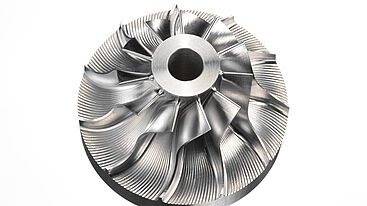
Impeller — aerospace turning
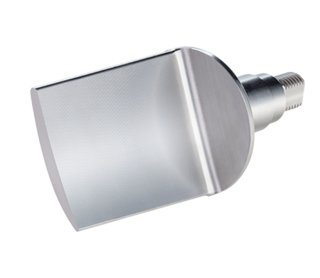
Turbine blade — precision 5-axis
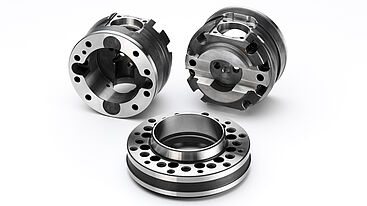
Precision aerospace chucks
Aerospace · Defense · Space & Satellite

Aerospace, Defense & Space

Structural components, engine parts, housings, and precision assemblies in titanium, Inconel, and aluminum. Tight tolerances, exotic materials, full traceability — for aerospace, defense, and a growing space and satellite sector demanding the same precision at higher volumes.

AS9100 supply chain 5-axis prismatic Swiss turning Exotic alloys Space & Satellite Traceability
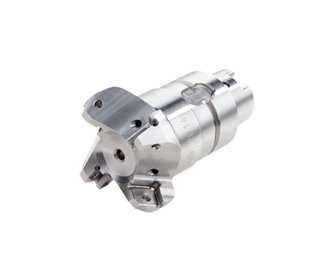
Milling head — medical precision
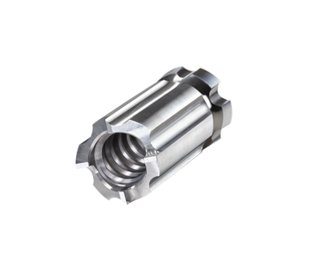
Precision nut housing — medical
Medical · Surgical · Implants

Medical Device

5-axis and turning applications in titanium, stainless, and cobalt chrome. ISO 13485 supply chain awareness, exceptional surface finish requirements, and lot traceability. From surgical instruments to implantable components — the right machine, right tooling, right process.

ISO 13485 aware Titanium · CoCr Surface finish Implants
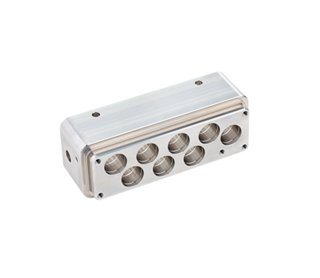
Precision manifold — automotive
Automotive · EV · Tier 1 & 2

Automotive & Tier 2

High-volume machining of aluminum, cast iron, and steel. Automation and robot cells for lights-out production runs. Cycle time and cost-per-part optimization as the primary deliverable — from housings and brackets to transmission and drivetrain components.

High-volume turning Robot automation Lights-out EV drivetrain
Precision chucking components
Job Shops · Contract Mfg · OEM

General Precision Machining

Job shops and contract manufacturers serving multiple verticals. We understand the need for flexibility — our single-source model means faster setup, better decisions, and a permanent partner for tooling, machines, and application support.

Multi-vertical Single-source Application support Fast setup
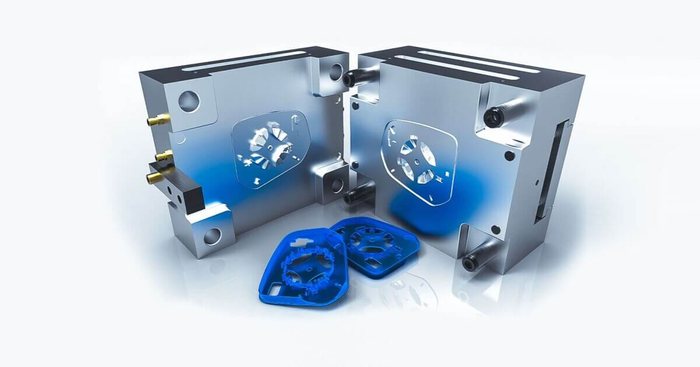
Precision injection mold — die and mold machining
Shibaura UVM — precision optics surface
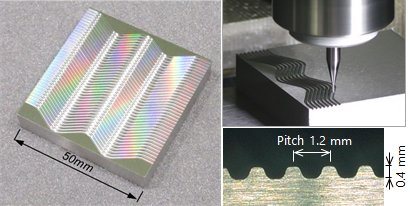
Diffraction grating · 50mm — UVM 5-axis
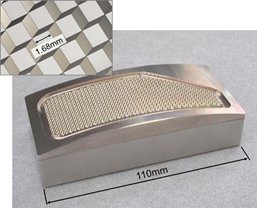
Shibaura UVM — micro-textured optical mold
Micro-lens array mold · 110mm — 10nm Ra
Die & Mold · Precision Optics · Micro-Machining

Mold, Die & Precision Optics

One of the most demanding applications in precision manufacturing — and a core focus of the Shibaura UVM platform. Die and mold shops demand sub-micron surface accuracy, mirror-finish cavity work, and the ability to cut complex 3D freeform geometries without secondary hand-polishing. Optical applications push further still: diffraction gratings, micro-lens arrays, and freeform optics require 10nm Ra surface finish and nanometer-level positioning accuracy only achievable with aerostatic bearing spindles.

Injection mold Die casting mold Freeform optics Diffraction grating Shibaura UVM 10nm Ra Sub-micron
SEMI SEMICONDUCTOR · ELECTRONICS · PHOTONICS
Semiconductor · Electronics · Photonics

Semiconductor & Electronics

Semiconductor equipment and electronics manufacturing demand the most exacting machining tolerances in any industry — wafer handling components, vacuum chamber parts, heat exchanger plates, and photonic device housings all require nanometer-level surface integrity and sub-micron form accuracy. The Shibaura UVM platform with aerostatic bearing spindle and linear motor axes is purpose-built for this class of work, producing chip packaging fixtures, sensor housings, and precision lens mounts directly from program — no hand-lapping required.

Wafer handling Vacuum chambers Photonic devices Sensor housings Shibaura UVM Sub-micron form Lens mounts
Our story

Built by industry.
Built for American manufacturing.

Lights Out Machinery & Automation was founded by experienced industry executives who saw the same problem everywhere they looked: American manufacturers were buying world-class machines and running them with world-class tooling — but without the application expertise to make them perform at their potential.

The gap wasn't in the equipment. It wasn't in the cutting tools. It was in the space between them — the process knowledge, the programming expertise, the speeds and feeds optimization that turns a machine investment into a competitive advantage. That space was occupied by nobody.

Machine tool dealers sold iron and moved on. Cutting tool distributors shipped product without understanding the machines it ran in. CAM consultants wrote programs without accountability for tool life or cycle time. And the shop owner stood in the middle, managing three separate relationships that never talked to each other.

"We didn't build LOMA to be another distributor. We built it to be the partner we wished existed when we were on the shop floor."

LOMA was built to close that gap — permanently. By combining capital equipment supply, precision cutting tools, and full application engineering under one roof, we give American manufacturers the single-source technical partnership that the industry's growth demands.

The American manufacturing resurgence is real. Reshoring is accelerating. Defense spending is rising. Aerospace production is expanding. The shops positioned to capture that growth are the ones with the right machines, the right tooling, and the right engineering support — all working together. That's what LOMA delivers.

LO
Rooted in Massachusetts. Built on decades of combined experience in precision machining, capital equipment, and industrial supply — serving precision manufacturers across the Northeast, from job shops to OEM production floors.
Our mission
To be the partner that American manufacturers deserve — supplying the machines, the tooling, and the engineering expertise to compete and win at the highest level.
★
Customer success is our success
We measure our performance by your results — not by units shipped. If your shop isn't hitting cycle times, reducing scrap, and running more efficiently, we haven't done our job.
✓
High integrity — we do what we say
We make commitments we can keep and keep the commitments we make. If we say we'll be on your floor Tuesday morning, we're on your floor Tuesday morning. No excuses. No surprises.
⚙
Technical excellence over sales pressure
We won't recommend a machine we can't justify with ROI analysis. We won't recommend a tool we don't believe in. Our reputation is built on the quality of our recommendations — not the volume of our transactions.
→
We stay after the sale
Our relationship with a customer begins at installation and never ends. We're there for cycle time optimization, process changes, new jobs, and new challenges — for the life of the equipment.
🇺🇸
Committed to American manufacturing
We believe in the resurgence of domestic manufacturing and we're building LOMA to accelerate it. Precision machining is a strategic national asset. Helping American shops run better is not just a business — it's a mission.
∞
Single source — fully accountable
One partner for machines, tooling, and engineering means one point of accountability. When something needs attention, there's no finger-pointing between vendors. One call. One relationship. One outcome.
Our family of brands

One partnership.
Machines, tooling & engineering.

LOMA brings the machines and the application engineering. North Shore Industrial Tool, the other half of the team, brings the cutting tools and MRO supply. One conversation, one contact, one solution.

Cutting tools & MRO · Same team
North Shore Industrial Tool

The Northeast's trusted source for carbide cutting tools, NSHP Exclusive tooling, and industrial MRO supply.

NSHP Exclusive carbide end mills, drills, inserts
Hundreds of brands, one solution
MRO consumables and safety supply
Predictive reorder engine
CNC machinery, automation & engineering
LOMA — Lights Out Machinery & Automation

CNC machining centers, turning centers, 5-axis machines and complete automation cells — supplied, installed and supported by our team, with the application engineering that makes them produce from day one.

Machining centers — VMC, HMC, 5-axis
Turning centers & multi-tasking
Robot cells & automation systems
Workholding & fixture systems
CNC programming, CAM & process development
Speeds, feeds & toolpath optimization
On-site setup, operator training, cycle time & ROI analysis
Coming soon: EDM, and surface, ID, OD & centerless grinding
Where these machines go

Different industries, different reasons the part is hard.

Aerospace and space are low volume and high consequence. Medical is slender and tight-toleranced in material you cannot afford to scrap. Production turning is decided by cost per piece. The machine that suits one rarely suits all three — these pages work through why.

Common questions

Automation, cycle time and getting the downtime back.

The questions we get asked most about running unattended, cutting cycle time and keeping spindles turning. If yours isn’t here, call 978-356-2500.

What does it actually take to run a machine lights out?
Four things have to be true. The part has to get in and out without a person — a bar feeder for bar work, a loader or robot for chucked work. Chips, coolant and thermal drift have to be managed for the length of the run. Something has to notice a broken or worn tool before it makes four hundred bad parts. And there has to be enough tooling in the changer to reach the end of the program. Get one wrong and you are not running lights out, you are gambling overnight. We walk through all four on our lights-out machining page.
Do I need a robot, or is a bar feeder enough?
For bar work, a bar feeder and a parts catcher often cover it, and every lathe we supply takes one. You need part handling — a robot or a loader — when the work is chucked, when there is a second operation, or when the blank is not made from bar. The honest answer depends on the part, and it is worth deciding before you buy rather than after.
What is the difference between a collaborative robot and a built-in loader?
A collaborative robot sits beside the machine and can be moved between machines or re-tasked as jobs change — flexible, and the right answer for high-mix work. A built-in loader is part of the machine: the CW52MY GII carries a three-axis gantry overhead reaching both spindles with a 3 kg payload, and the C24 G has a gantry loader with a twelve-station stacking magazine. Built-in costs no floor space and needs no cell fencing, but it does what it was designed to do rather than whatever you point it at.
Can automation be added to a machine I already own?
Usually, yes. Bar feeders, parts catchers, robot cells and pallet systems get added to existing machines regularly. What decides feasibility is control integration, whether the machine can signal cycle complete and accept a start command, guarding, and floor space. Send us the machine model and the part and we will tell you what it would take.
How much turret index time am I actually losing?
A turret indexes in roughly one to three seconds between tools — the machines in our range run 0.8 to 3.2 seconds tool-to-tool. Multiply that by tool changes per part, then by annual volume. On a short-cycle, high-volume job it adds up to real spindle hours, which is exactly why gang-tooled lathes exist: every tool sits on a slide that is already moving, so the next tool arrives as the slide travels and there is no index at all.
What is the fastest way to cut cycle time without buying a machine?
Usually tooling and process before iron. Better substrate and coating, correct speeds and feeds for the actual material condition, fewer tool changes, and eliminating a second operation are all cheaper than a new spindle. That is why we work both sides — through North Shore Industrial Tool we supply the cutting tools and application engineering as well as the machine, so the recommendation is not automatically "buy something".
Why do second operations cost more than they look?
Because the cost is not the cycle. It is the handling, the extra setup, the fixture, the WIP sitting between machines, the risk of scrapping a part that is already half finished, and a second chance to lose datum. Machines that finish a part complete — Swiss with back working, twin-spindle turn-mill, 5-axis milling — are usually justified on that rather than on cycle time alone.
What causes unplanned downtime, and what actually reduces it?
In practice: tool failure nobody caught, chip and coolant problems, setups running long, and waiting on tooling that was not in the crib. Tool life management and probing address the first, conveyors and coolant capacity the second, quick-change tooling and workholding the third, and a managed inventory program the fourth. Only one of those four is a machine purchase.
Does running unattended compromise accuracy?
Not if the machine can verify itself. The Shibaura UVM images its own cutter contour while it is spinning, checks spindle displacement, and re-clamps the tool when it detects dynamic run-out rather than cutting the error into the workpiece. Spindle chillers and thermal stabilising systems hold position across a long run. Accuracy and unattended running meet at self-measurement — a machine that cannot check its own condition is the one you should not leave alone.
Can high-mix, low-volume work be automated, or only long runs?
Both, but differently. Long runs justify dedicated handling — a bar feeder or built-in loader running one part for a shift. High-mix work is better served by flexible automation: a collaborative robot that can be re-taught, quick-change workholding, and machines that finish parts complete so there is less to schedule. The mistake is buying long-run automation for a high-mix shop and then fighting the changeover.
What should I work out before automating?
How many unattended hours you would actually gain, what the machine does when something goes wrong, who reacts and how quickly, and what happens to the operator's time once it is freed up. Automation that runs four hours unattended and then needs two hours of morning cleanup has not gained you six hours. That arithmetic is worth doing on your own numbers before anyone quotes you.
What happens after the machine is installed?
Our application engineers stay involved. Run-off and operator training are the start, not the finish — processes drift, materials change, tool life shifts, and new work comes in the door that nobody planned for when the machine was quoted. We keep working with you on process improvement and continuous improvement: revisiting speeds and feeds, cutting setups out, extending tool life, and taking cycle time out of jobs you are already running. Because we supply the cutting tools and the machine, that work does not stop at the boundary between two suppliers.
What kind of parts do these machines make?
Aerospace impellers and bladed geometry, turbine and energy components, space and defense hardware, medical and orthopedic parts such as bone screws and instrument components, and high-volume precision turned parts. Different problems: aerospace and space are low volume and high consequence, medical is slender and tight-toleranced in expensive material, and production turning is decided by cost per piece.
Keep looking

Ready to run lights out? Start with one call.

978·356·2500  ·  Send us a message →  ·  Send us the part →