4 & 5-axis horizontal machining centers, 500 mm pallets to six-metre parts.
Mandelli started in Piacenza, Italy in 1932 as a precision machining shop, built its first machining center in the 1960s and has built them ever since. Four and five axis, milling and multitasking, on pallets from 500 mm on the HS-50 and 630 mm on the HS-63 to 800 mm and larger on the SPARK machines — up to the SP 4000 carrying twenty tonnes and the six-metre RUMBLE profiler.
This is the tier above a trunnion VMC: pallet-pool production, titanium structural work, and cell automation measured in machines rather than in robots. Aerospace engine cases, blisks and landing gear; power generation impellers and turbine components; large transmissions and molds.
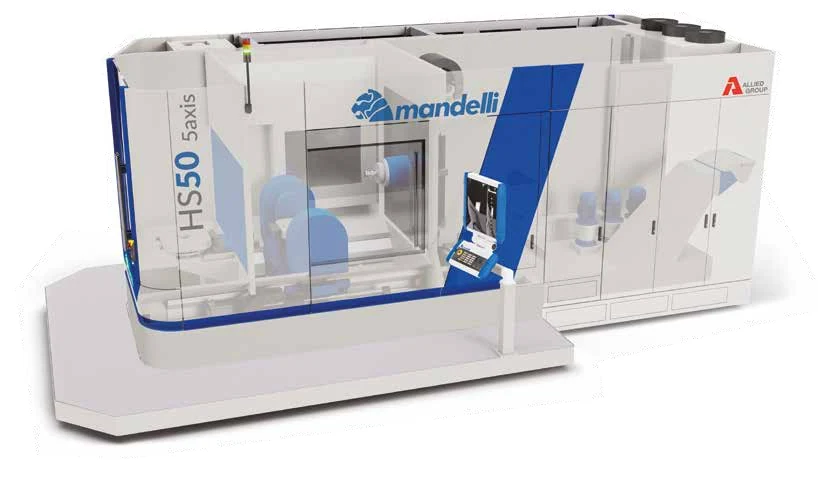
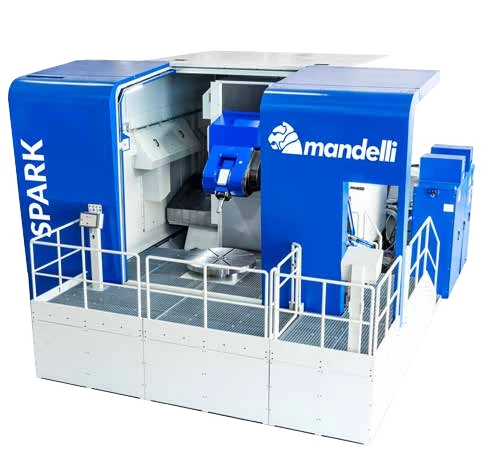
For most Northeast shops the place to start is the SPARK 2 HS: the compact HS-50 and HS-63, 4- or 5-axis, milling and turning in one machine, with pallet automation built in. See the HS series ↓
Mandelli · Piacenza, Italy · building machining centers since the 1960s · part of Allied Group since 2021
HS-50 and HS-63 · milling and turning · pallet automation built in
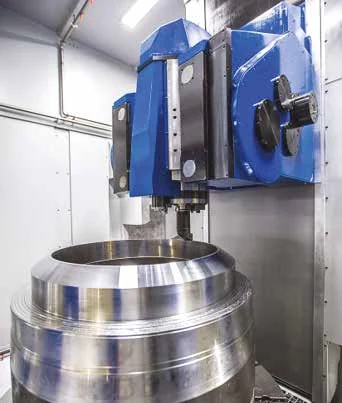
The HS is the SPARK architecture scaled down for the size of part most Northeast shops actually run. It is a multitasking machine — turning and milling in one setup — built for fast machining: 75 m/min rapids, 7 m/s² acceleration, and quick tool and pallet changes. Mandelli’s stated goal for it is high productivity and a shorter return on investment.
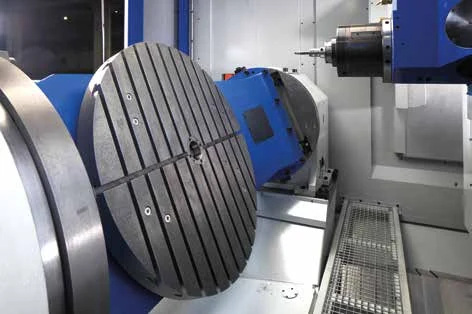
It is modular, on a one-piece base, which Mandelli say eases transport and installation. Tooling comes from multilevel racks or an anthropomorphic robot with an arena magazine, and the automatic pallet changer runs on one or two levels with a centring station — so the multi-pallet version can run unattended, around the clock. Three thermal circuits monitor and manage thermal change to hold accuracy.
4 or 5 axesMill + turn500 or 630 mm palletUp to 324 tools
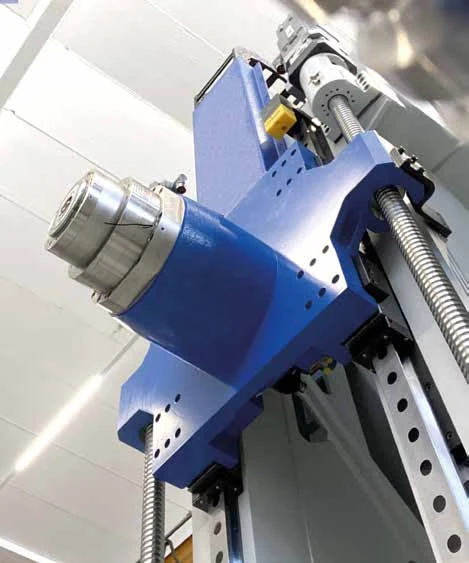
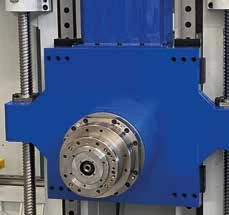
HS milling head: 10,000–20,000 rpm, 22–50 kW (29–67 hp), 90–300 Nm. North American configurations, options and controls confirmed at quotation.
Why horizontal
The chips fall out, and the pallet keeps working
On a vertical machining center chips collect in the pocket and the operator stands at the machine. A horizontal spindle lets swarf fall clear of the cut, which matters enormously in deep cavities and in material where re-cutting chips destroys tool life. It also puts the workpiece on a pallet — and a pallet can be loaded while the machine is still cutting the last one.
That is the real argument. A horizontal machining center is a production machine that expects to keep running. Mandelli have been building them since the 1960s and describe themselves as specialists in machining center automation, which is the same thing said a different way.
Chip evacuationPallet-basedBuilt for volumeDeep cavity work
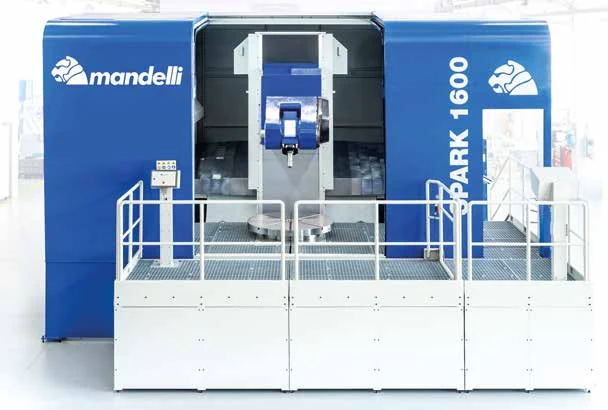
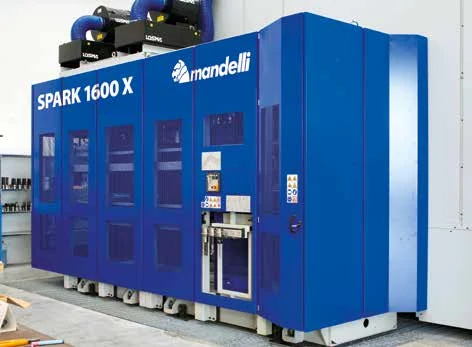
Mandelli · SPARK 1600
Hard material
SPARK Ti: designed to leave semi-finishing out
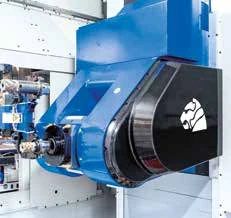
The Ti variant is built for titanium and superalloys. A double-drive tilting head generating 12,000 Nm of continuous torque, backlash-free kinematics, damping technologies that Mandelli state reduce vibrations by 75%, and coolant at 100 bar in milling and 350 bar in turning.
Mandelli's claim for it is specific and worth quoting: it is the 5-axis machining center that leaves semi-finishing operations out. On titanium structural parts that is not a marginal saving — it removes an entire pass from the process.
12,000 Nm tilting headVibration −75%350 bar turning coolantTitanium & superalloys
Scale
From a 500 mm pallet to a six-metre profiler
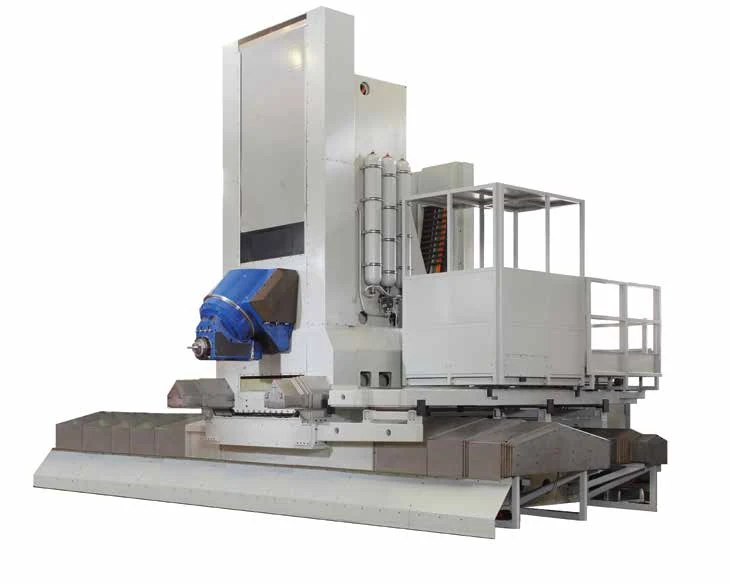
The SPARK line starts with the SPARK 2 HS — a 500 mm pallet on the HS-50, 630 mm on the HS-63 — moves to 800 mm pallets on the SP 1200 and larger from there, and runs up to the SP 4000, with 4,000 mm of X travel, carrying up to 20 tonnes in milling. Beyond that the RUMBLE profiler reaches 6000 mm of X, built on a modular concept where the X stroke can be any multiple of two metres.
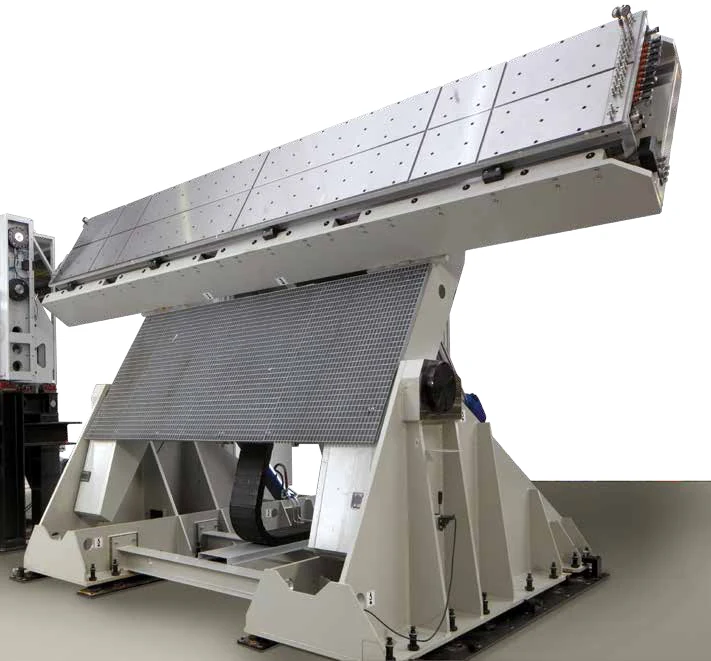
RUMBLE was the platform Mandelli supplied in 2008 for machining a six-metre titanium workpiece for the Boeing 787. Positioning accuracy across the range is 4–5 μm with 3–4 μm repeatability, and 4 arcsec on the rotary axis.
500 mm pallet to 6 m20 tonne payload4 μm positioning4 arcsec rotary
Automation
Pallet pools, tool rooms and a robot on an aerial rail
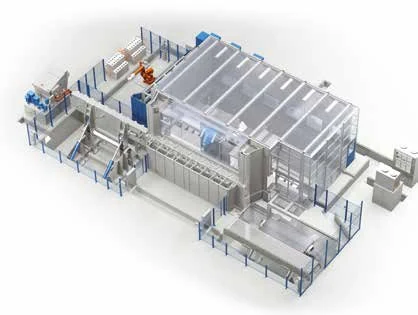
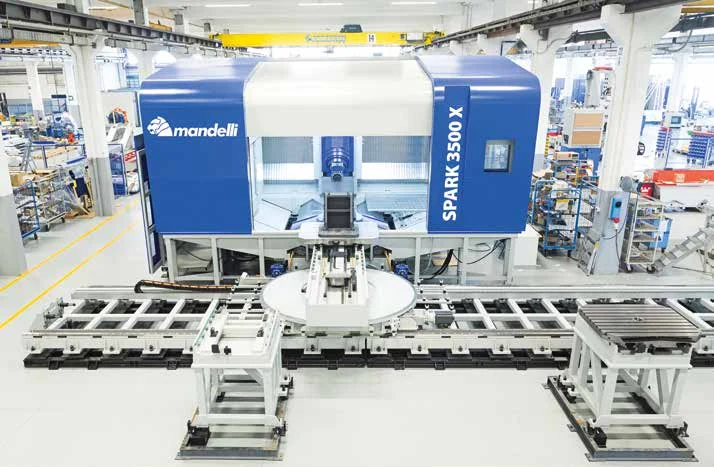
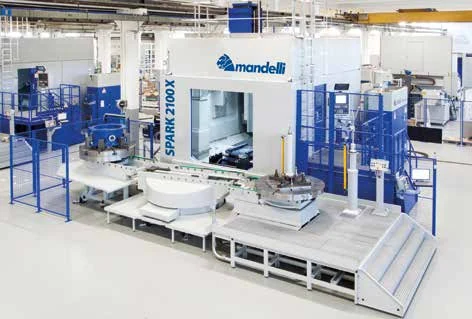
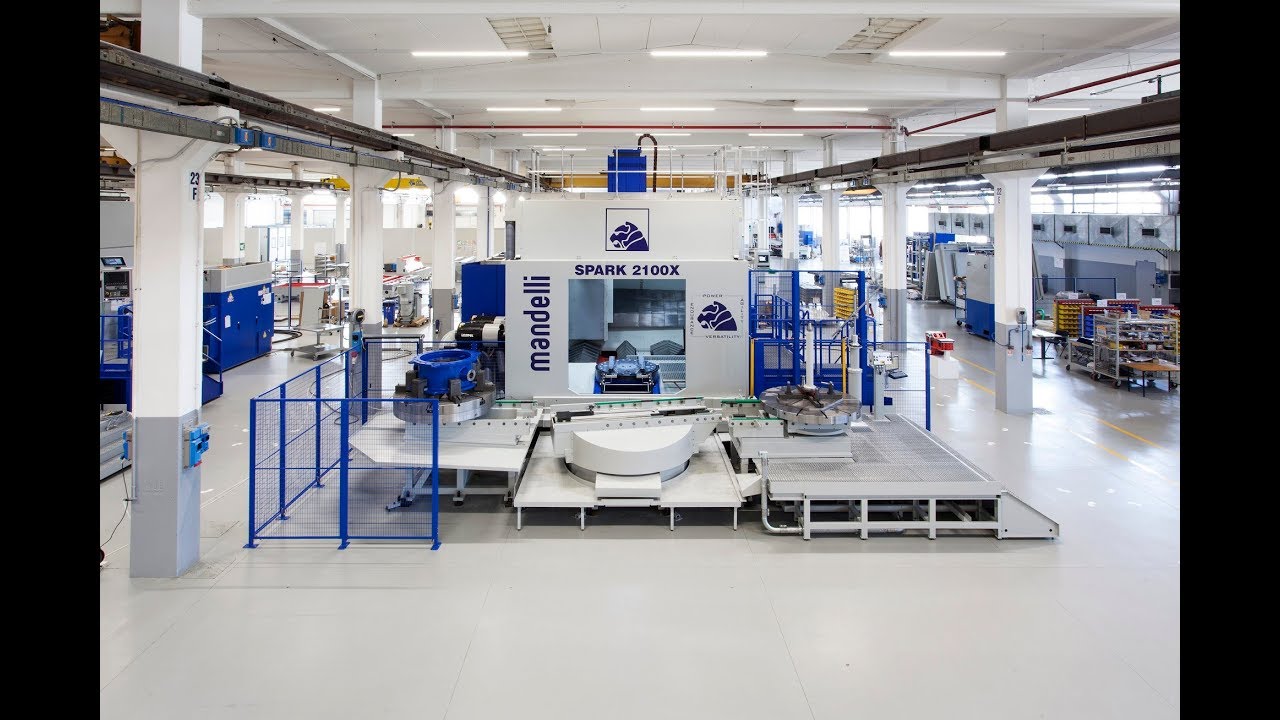
This is cell-level automation rather than a robot beside a machine. Pallet handling runs from a twin automatic changer, through a transpallet system with up to eight buffer stations, to in-line or multilevel systems of 5 to 100 pallets with loading, unloading and centring stations — all integrable with the plant ERP.
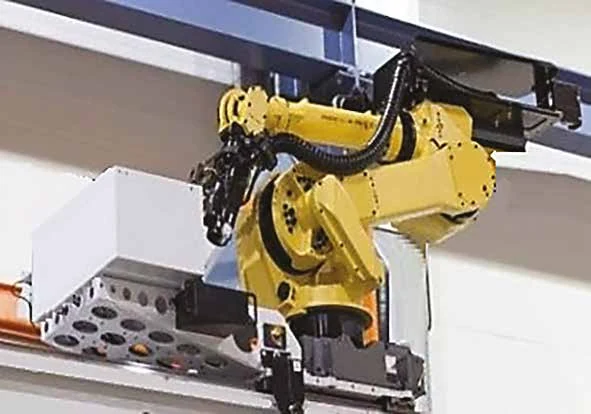
Tooling is handled the same way. A shared tool room holds over 500 cutting tools serving two or more machines, with an anthropomorphic robot on an aerial rail moving tools in batches of five between the room and each machine's changer. Mandelli's figure is that one operator can manage the tool set across five machines. The machine magazines themselves hold up to 500 tools on multilevel trays, with laser tool control and ID, air-blast and wiper cleaning of the tool cone before every pick-up, and a servo bracket for fast changes even with heavy tools.
5–100 pallet systems500+ tool roomRobot on aerial railERP integration
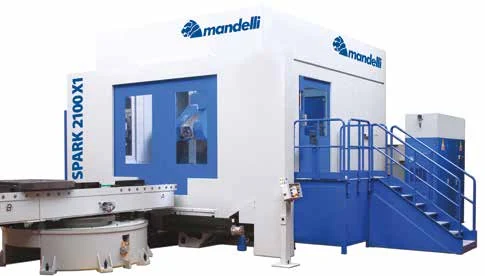
SPARK 2100 X pallet cellTool room robotRUMBLE tilting pallet
Mandelli · SPARK 3500 FMS
The software
iPum@ — where the AI actually sits
Four native systems. iPum@Control is the 22-inch interface. iPum@Scada optimizes pallet flow from real-time data. iPum@Predict processes machine data to catch conditions that would lead to a fault before they do — Mandelli say up to 48 hours in advance.
The interesting one is iPum@Smartcut, which monitors the cutting process and actively damps vibration to stabilize the cut. On the SP 2100 Mandelli describe it as avoiding chatter on the component surface by exploiting the machine's own structural rigidity. That is a machine intervening in its own process while it runs — the same principle as the Shibaura run-out retry, applied to chatter instead of tool condition.
H head4-axis work with fine geometric tolerances. Electrospindle or mechanical transmission.
U headNarrow enough to reach into complex parts; now also 5-axis, with a dual drive on the fifth axis.
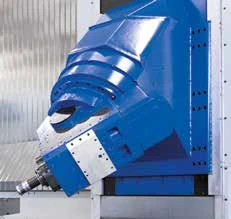
A head5-axis continuous. Electrospindle for speed, or mechanical transmission for torque.
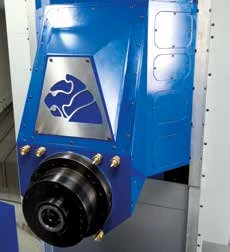
HS headThe compact head on the SPARK 2 HS series.
Mandelli milling headsPer Mandelli brochure · SPARK heads and the HS head
H head
U head
A head
HS head
Speed
5,000–24,000 rpm
6,000–9,000 rpm
5,000–24,000 rpm
10,000–20,000 rpm
Power (S1)
30–78 kW
48–50 kW (64–67 hp)
37–75 kW (50–101 hp)
22–50 kW (29–67 hp)
Torque (S1)
71–2,666 Nm
405–707 Nm
78–1,259 Nm
90–300 Nm
Head axis
—
0° to −90°, every 2.5° or continuous
−100° / +90° continuous · 7.5–15 rpm
—
Head-axis torque (S1)
—
—
3,000–12,000 Nm
—
Accuracy · repeatability
—
5 · 4 arcsec
4 · 3 arcsec
—
Taper
ISO · HSK · Capto
ISO · HSK · Capto
ISO · HSK · Capto
HSK-63 (HS-50) · HSK-63/100 (HS-63)
The heads are electro-welded steel or spheroidal cast iron, thermally stabilized, on dynamically balanced ceramic bearings with a pneumatic system that varies the bearing preload with spindle speed. A dedicated chiller controls spindle temperature, and thermal compensation of spindle growth is built into the NC. A sensor network adjusts or stops the spindle at preset alarm thresholds, detects vibration to prevent chatter automatically, and a tool-presence sensor guards against crashes.
Configured for the part
Three SPARK 2 builds
Same architecture, different heads, pallets and magazines
Mobility
SPARK 2 1600
7 pallets on an arena-type exchanger, the H head for 4-axis work, 108 HSK-100 tools, pallet exchange managed by iPum@Scada.
Aerospace
SPARK 2 2100
3 pallets and the A head with mechanical transmission for high-torque 5-axis continuous work, dual drive on the rotating axis, iPum@Smartcut against chatter.
Power and energy
SPARK 2 2100
2 pallets and the U head for heavy, precise stock removal, 216 Capto C8 milling and turning tools, pallet flow run by iPum@Scada.
Examples as Mandelli present them. SPARK 2 also comes as MILLTURN (fixed table, direct drive to 7,600 Nm, Hirth-locked spindles for turning) and Ti; see the FAQ.
2023–24HS50 compact multitasking HMC, then SPARK 4000, the largest SPARK.
Per Mandelli’s company history and brochures.
The range
Eleven machines, one architecture
SPARK, SPARK HS and RUMBLE
Mandelli · product line overview
SPARK 2SPARK 2100 X1SPARK 1600 XRUMBLE
Thermo-symmetrically designed structures in welded steel or cast iron, direct drive motors on the linear axes and table, roller-bearing linear guideways with damping, and a direct measuring system using pressurized optical scales on the linear axes with encoders on the rotary table. Heads are interchangeable — H for rigid 4-axis work, U for narrow access, A for versatile 5-axis, HS for high speed — and taper options run ISO, HSK and Capto.
Positioning accuracy 4–5 μm, repeatability 3–4 μm to ISO 230/2; rotary axis 4 arcsec accuracy, 3 arcsec repeatability. Siemens ONE or Fanuc control with the 22″ iPum@Control interface. Specifications per the Mandelli brochure and subject to change — confirm the configuration on quote.
What comes off them
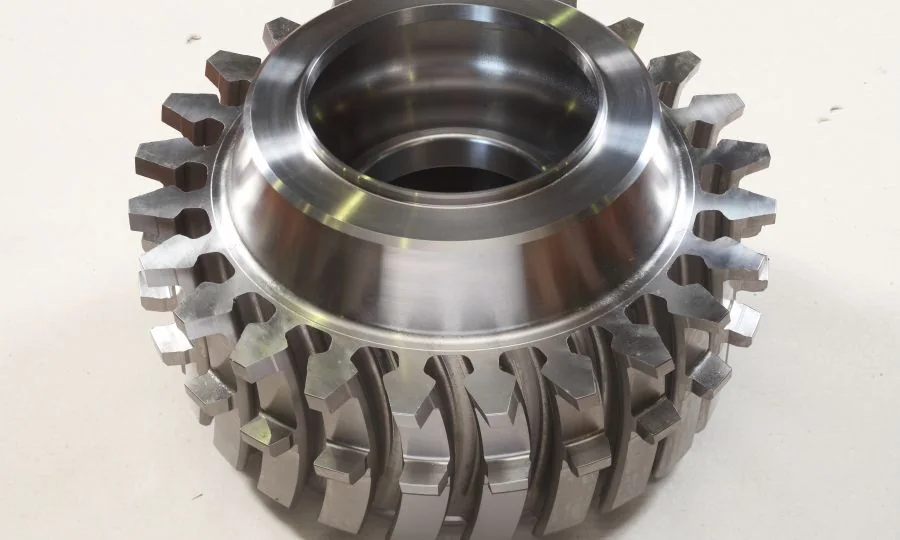
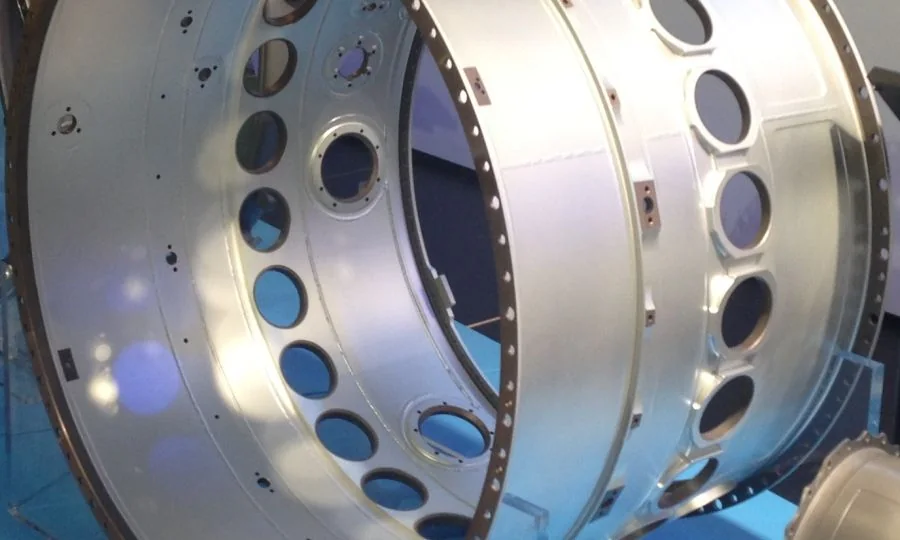
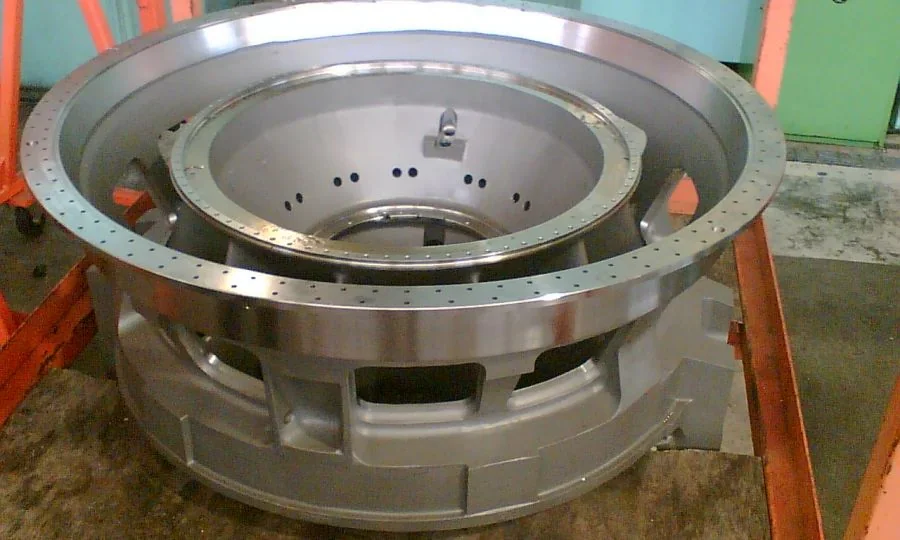
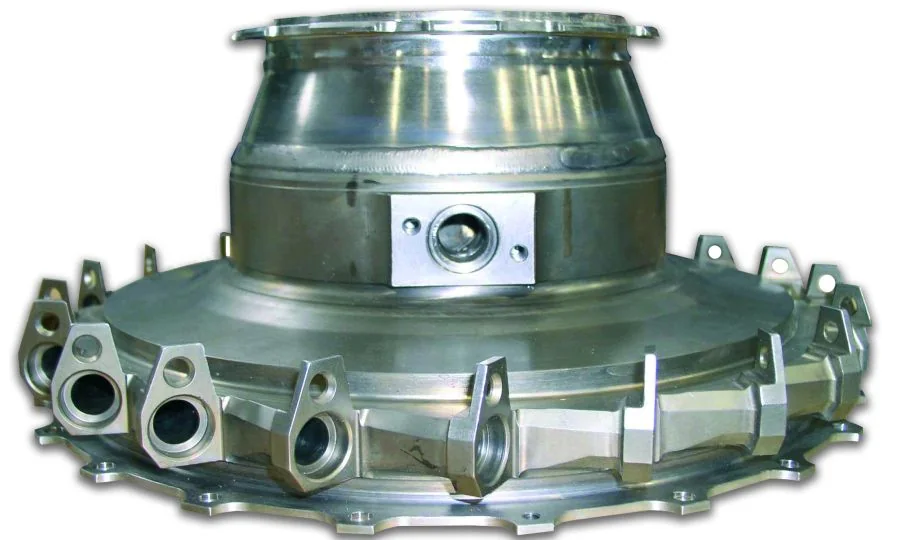
AerospaceEngine turbines, disks, shafts and combustion cases; landing gear; structural parts; ailerons; rudders and slats
Power generationOpen and closed impellers; butterfly and spheroidal valves; split-case pumps; turbines
MobilityAxles; roadwork, earth-moving and agricultural machinery; marine engines; excavators; elevators
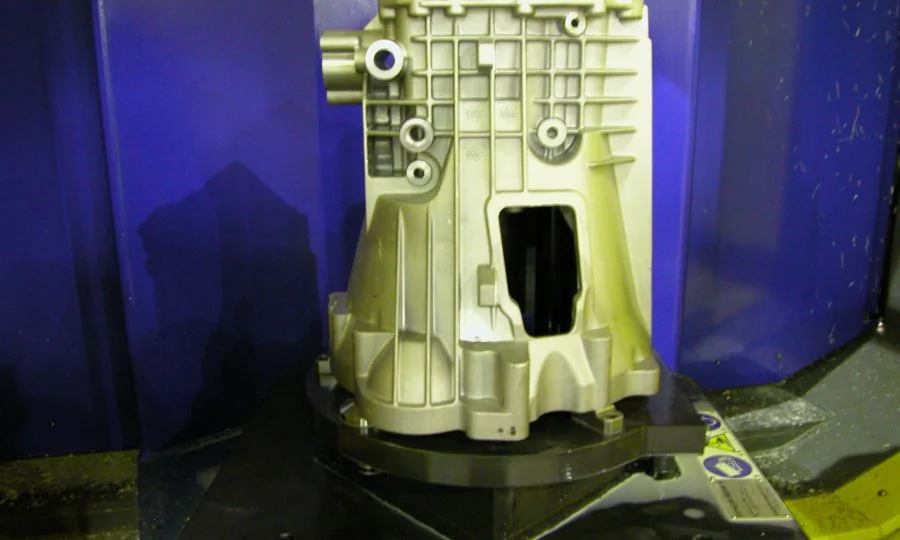
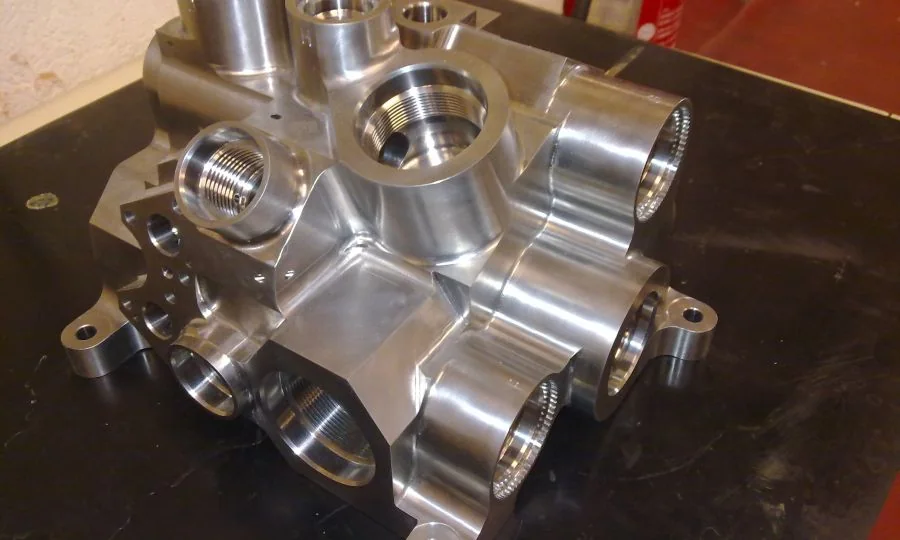
General and precisionMachine-tool components; gearboxes; hydraulic manifolds; textile machinery; transmissions; welded structures; large molds
Parts, not promises
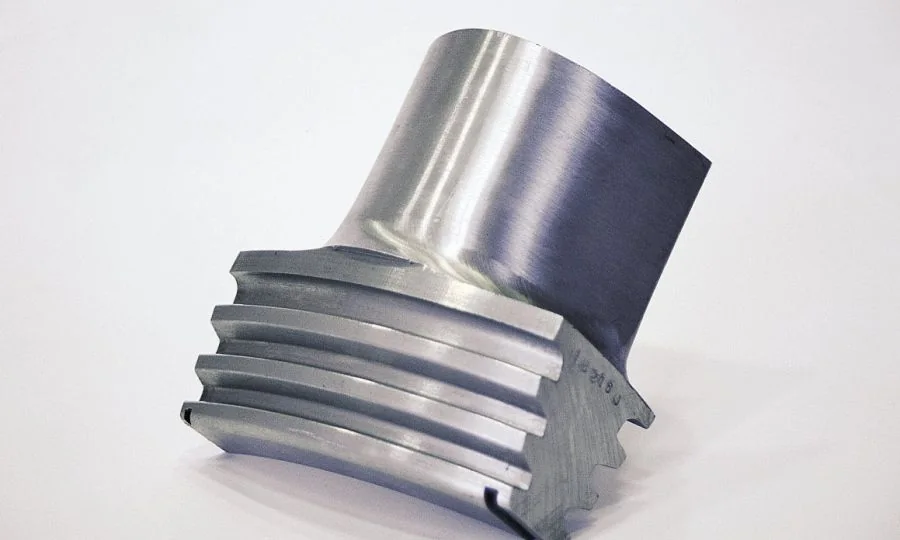
Aeronautics and aerospace — turbines, disks, shafts, combustion cases, landing gear, structural parts, ailerons, rudders and slats. Power generation — open and closed impellers, butterfly and spheroidal valves, split case pumps, turbines. Mobility — axles, marine engines, earth moving and agricultural machinery, elevators. General and precision machinery — machine tool components, gear boxes, hydraulic manifolds, transmissions, welded structures and large molds.
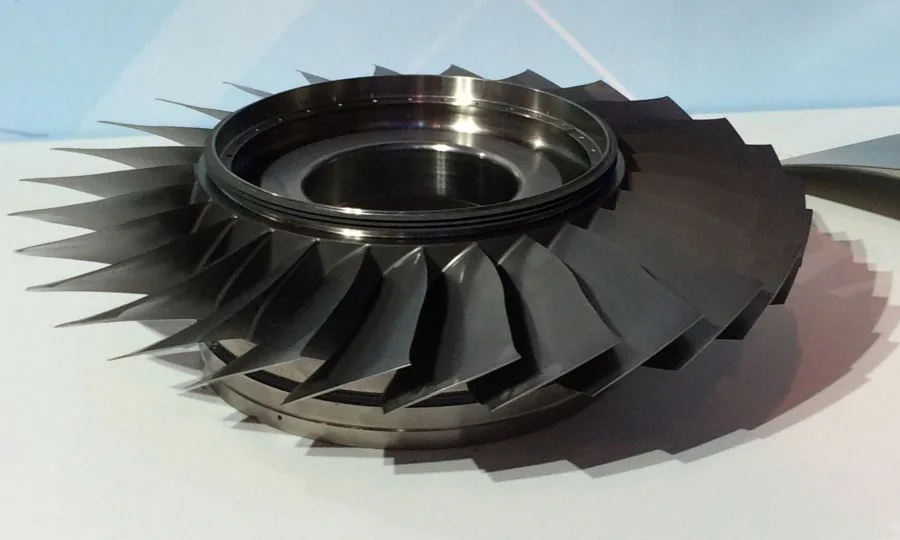
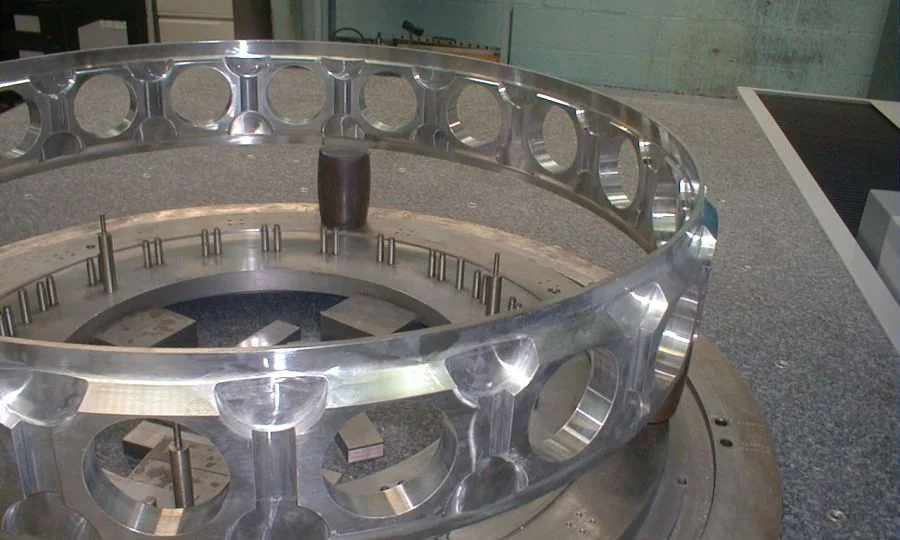
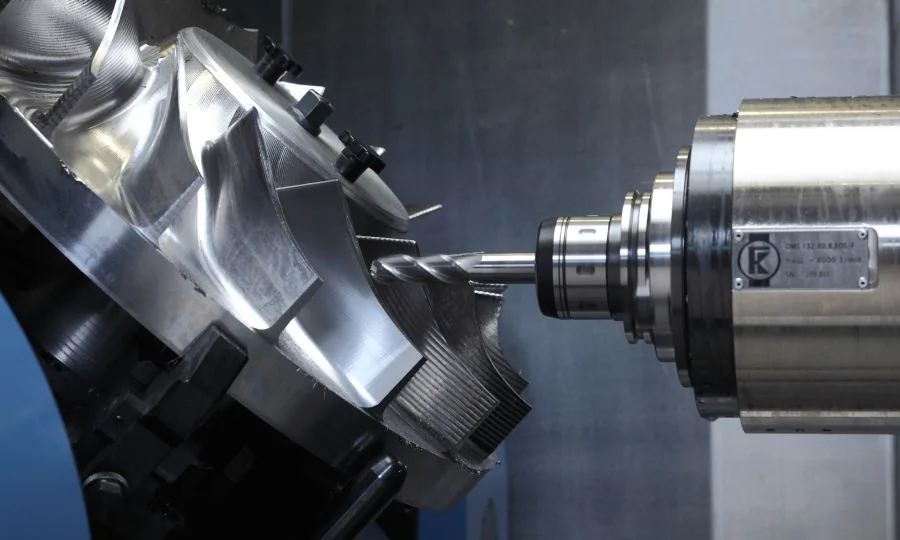
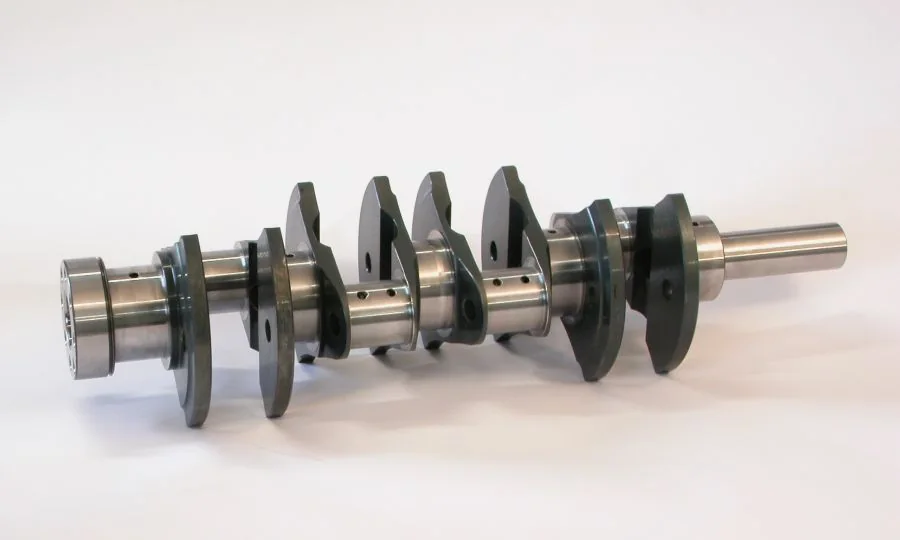
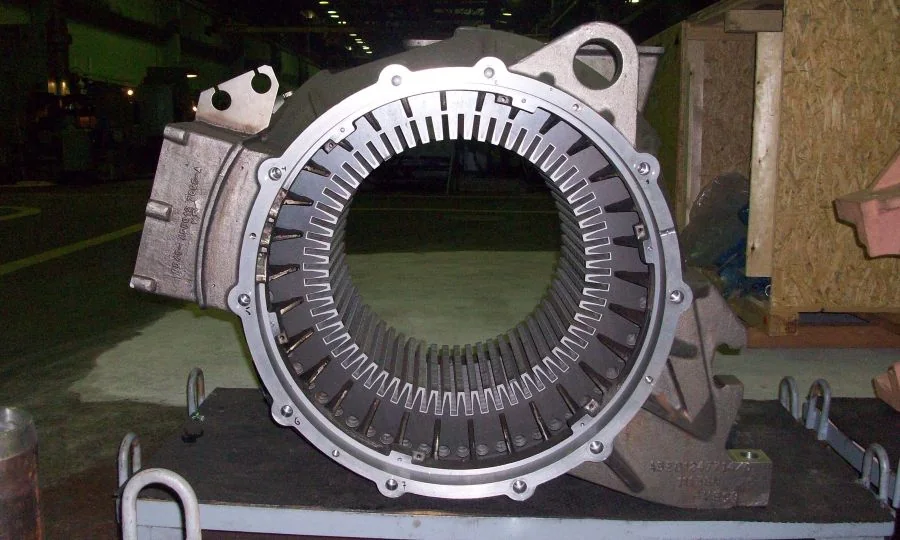
BliskIntegrally bladed rotor — the geometry that defines 5-axis capabilityFan diskTurbine engine fan disk with machined blade slotsTurbine bladeContoured aerofoil with fir-tree root formCombustion caseLarge-diameter engine case, aerospaceEngine frameHeavy structural engine frameCompressor ringThin-wall ring, aerospace structuralOpen impellerBladed impeller in cut, 5-axis continuousCrankshaftLarge crankshaft — mill/turn in one setupStator framePower generation stator housingGear housingCast transmission housing on palletHydraulic manifoldBraking system distributor — deep bores and portsCompressor bladeBlade held for finish machiningCombustion case detailFlange and boss features on a large engine case
Support
Service, spares and retrofit
Mandelli North America · Allied Group warehouses
10,000+original spare parts in stock, with Allied Group warehouses worldwide
8 hremote diagnosis from the request — resolves 80% of cases
24 hlocal service squad on site — 12% of cases
72 hMandelli technicians on site — 8% of cases
Support runs on four levels: help line, remote diagnostics from headquarters, local intervention and factory intervention, alongside preventive and predictive maintenance programs and maintenance courses for customers’ own crews.
Retrofit and revamping covers the older Mandelli models still in service — SPARK, ROCK, STORM, THUNDER and the M range (M3 to M14): mechanical restoration, function changes for new production, integration into new FMS lines, safety upgrades, or an NC-only upgrade that leaves the machine structure original. Some of it can be done at the customer’s site rather than at the factory.
Figures per Mandelli Today (2024) and the Mandelli brochure. Local installation and service details are confirmed at quotation.
Common questions
Horizontals, answered plainly.
What is the difference between a horizontal and a vertical machining center?
Spindle orientation, and everything that follows from it. A horizontal spindle lets chips fall clear of the cut rather than collecting in the pocket, which matters in deep cavities and in materials where re-cutting swarf destroys tool life. Horizontals are also built around pallets, so the next part is loaded while the current one is still being cut. Verticals are cheaper and simpler and suit lower volumes and flatter parts; horizontals are production machines.
What size parts can these machines take?
Pallets start at 500 mm on the HS-50 and 630 mm on the HS-63, move to 800 mm on the SP 1200 and grow from there, up to the SP 4000 with 4,000 mm of X travel, which carries up to 20 tonnes in milling. Beyond that the RUMBLE profiler reaches 6000 mm of X travel and is built on a modular concept where the X stroke can be any multiple of two metres.
Are these suitable for titanium and superalloys?
That is what the SPARK Ti was built for. A double-drive tilting head producing 12,000 Nm of continuous torque, backlash-free kinematics, damping that Mandelli state reduces vibration by 75 percent, and coolant at 100 bar in milling and 350 bar in turning. Mandelli's stated aim for it is to eliminate semi-finishing operations entirely.
Can they turn as well as mill?
Yes. The multitasking versions combine turning and milling in one machine, with the table fixed to the base and a direct drive motor sunk into the structure generating up to 7,600 Nm of continuous torque. Spindles are locked with Hirth rings during turning to provide stiffness and protect the bearings.
What automation is available?
Pallet handling from a twin automatic changer through to in-line or multilevel systems of 5 to 100 pallets with loading, unloading and centring stations, all integrable with plant ERP. Tooling is served by a shared tool room holding over 500 tools with an anthropomorphic robot on an aerial rail moving tools between the room and each machine. Mandelli's figure is one operator managing the tool set across five machines.
What accuracy do they hold?
Positioning accuracy of 4 micrometres with 3 micrometres repeatability on the smaller models, 5 and 4 micrometres on the larger, measured to ISO 230/2. Rotary axis accuracy is 4 arcsec with 3 arcsec repeatability. Measurement is by high-resolution pressurized optical scales on the linear axes and encoders on the rotary table.
One relationship
Machines from LOMA. Everything they run on from NSIT.
A horizontal lives on pallet changes and unattended hours — which makes repeatable workholding and a crib that never runs dry the difference between a spindle that cuts and one that waits.
Zero-point and form-fit workholding
HWR SOLIDPoint and SOLIDBolt zero-point systems, SOLIDGrip centering vises and SOLIDStamp form-fit clamping — pallets that repeat, and blanks prepped off the machine instead of on it.
Our sister company North Shore Industrial Tool handles what the machine runs on — cutting tools, toolholding, workholding, metrology and a managed inventory program. Same people, same phone number, so the machine arrives with the tooling package already sorted.